
INNOVATIVE SOUND DESIGN.
POWERFUL RESULTS.
Two flagship reverbs powered by physical modeling and psychoacoustic spatial depth. The Reverbs that tell a story.
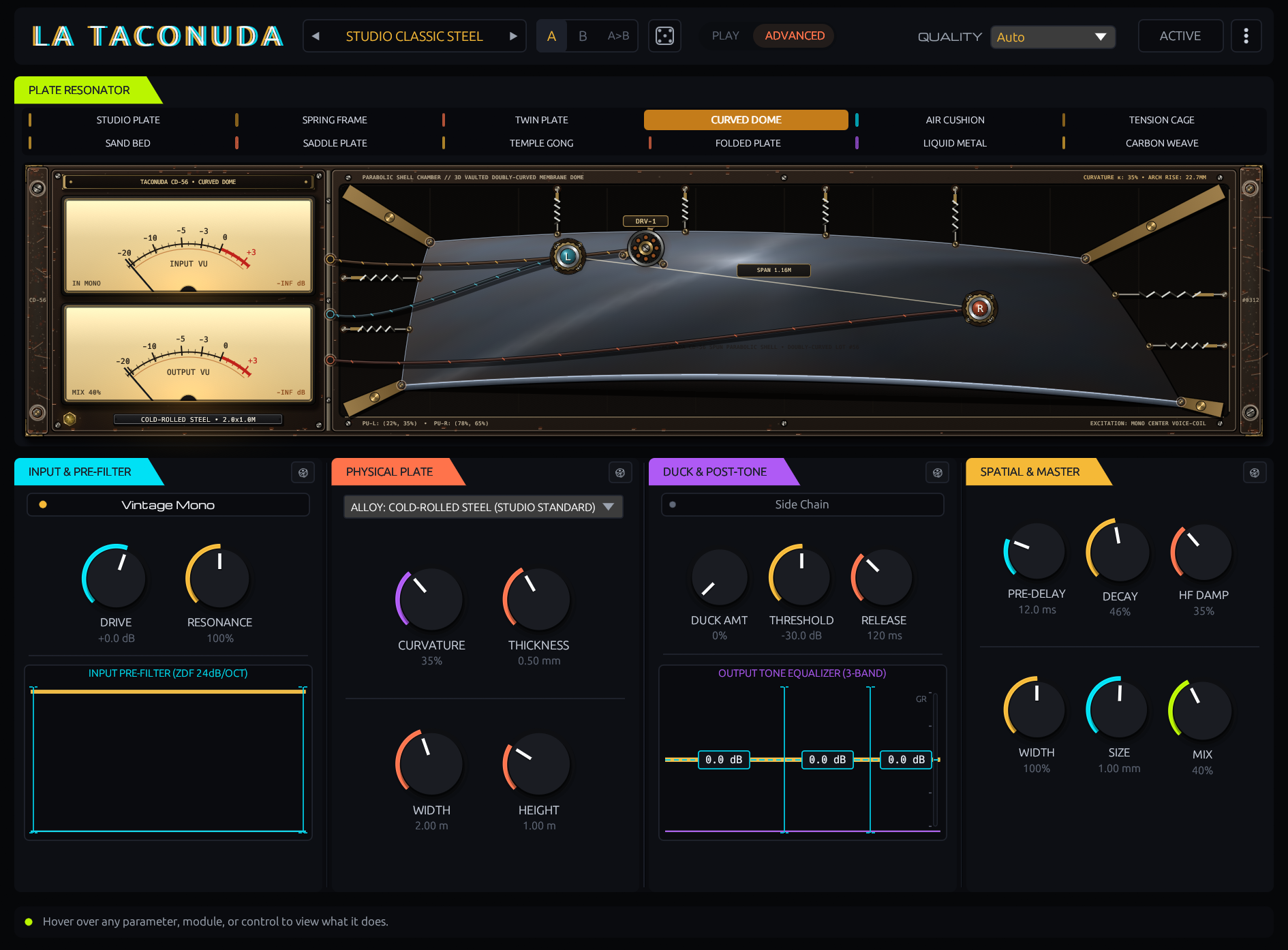
LA TACONUDA
Physical modeling plate reverb capturing the rich, organic resonance of real vibrating metal. Delivers lush vintage warmth, deep space, and effortless mix-ready tone.
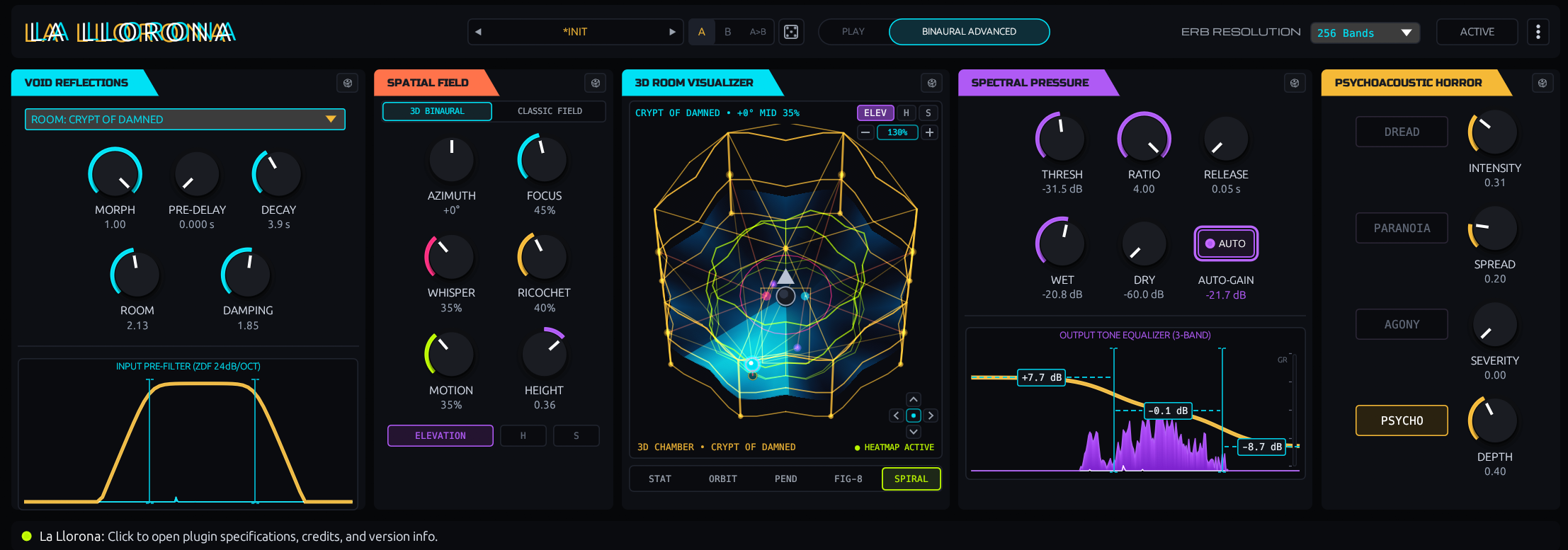
LA LLORONA
Immersive binaural reverb that bends space. Now featuring Binaural Advanced Mode with 500+ subject HRTF profiles, 3D movement paths, and a live 3D Room & Heatmap Visualizer.
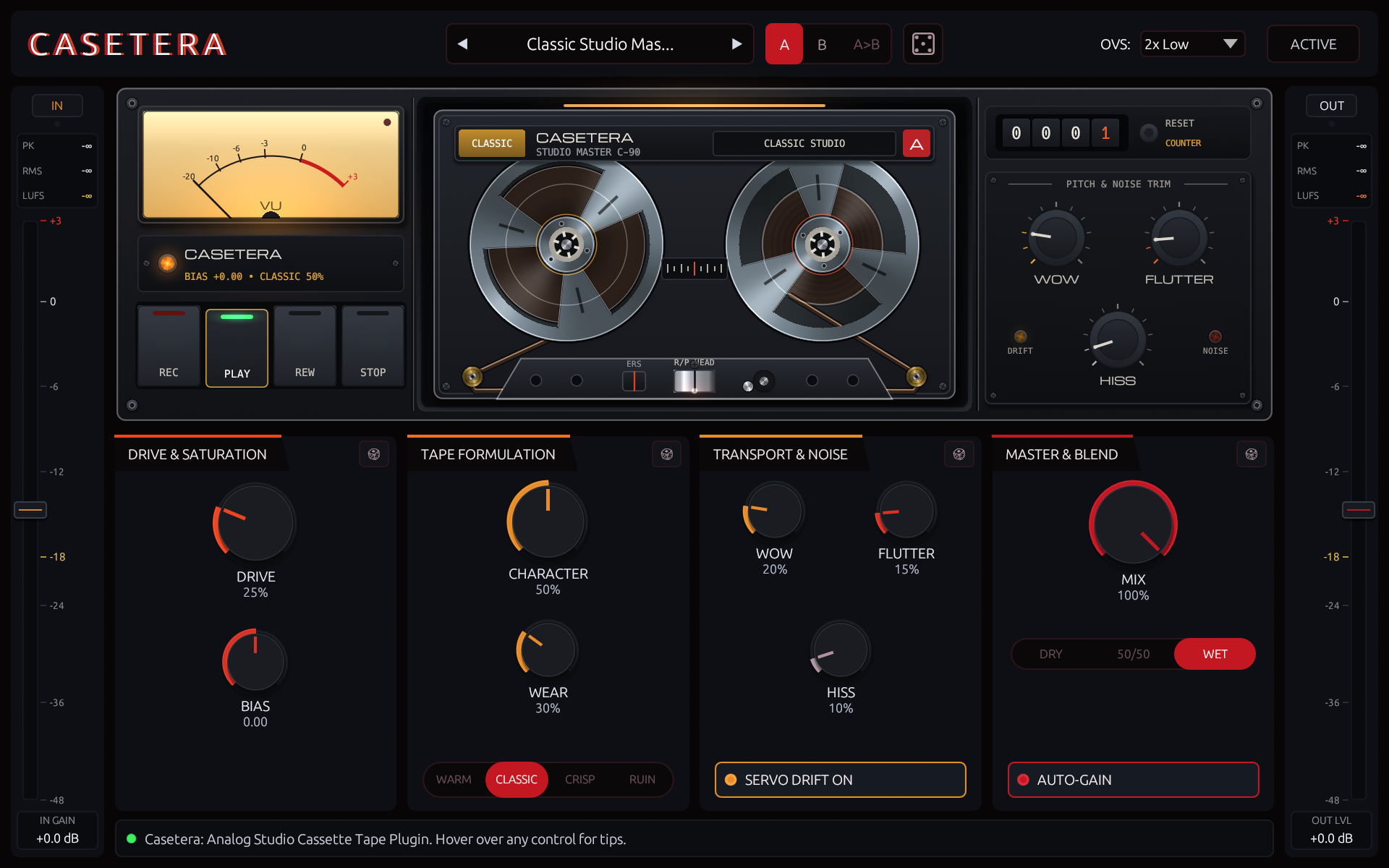
CASETERA 100% FREE PLUGIN
Wrap your drums, keys, guitars, and vocals in the cozy warmth, sweet crunch, and dreamy pitch sway of a real vintage cassette deck. Includes 4 distinct tape flavors—completely free forever.
BUILT FOR SOUND DESIGN & MIXING
Radical acoustic physics and psychoacoustic depth—engineered to transform your mixes instantly.
INNOVATIVE SOUND DESIGN.
Physical modeling meets psychoacoustics. Sculpt living metal plates and warped spatial dimensions that sterile algorithms simply cannot touch.
ENDLESS CREATIVITY.
Break free from static rooms. Inject eerie binaural movement, cinematic tension, and otherworldly atmosphere into your tracks in seconds.
POWERFUL MIX INTEGRATION.
Colossal depth with zero mix mud. Tuned to human hearing curves so your deepest reverbs never fight your lead vocals or instruments.
LOVED BY PRODUCERS
See what award-winning composers, mixers, and audio engineers are saying.
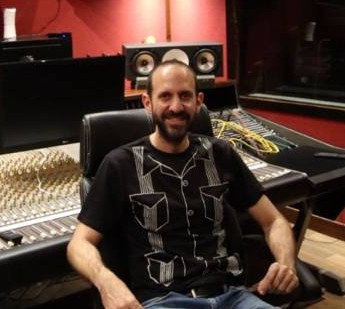
“La Llorona is a very unique plugin. It's not designed to mimic any specific hardware but to create a new world of sonic possibilities.”
EXPLORE OUR PLUGINS
Each plugin serves a distinct musical role with zero overlap—from colossal plate and 3D reverbs to our 100% free vintage cassette deck.
LA TACONUDA
From silky metallic shimmer to colossal plates that elevate entire mixes. La Taconuda captures the rich, organic resonance of real vibrating metal. Easily shape tone, size, and character across 6 metals and 12 unique metallic structures for effortless mixing and bold sound design.
- 12 Metallic Structures
- Play & Advance Modes
- Auto Quality Mode
- Gammatone Spectral Ducker
LA LLORONA
An immersive binaural reverb that bends space around and above the listener. Powered by 500+ subject HRTF profiles, 5 autonomous 3D movement paths, a live 3D Room & Heatmap Visualizer, and 4 tension engines while keeping your center mix clean.
- 500+ Subject 3D Binaural HRTF
- 3D Room & Heatmap Visualizer
- 5 Autonomous 3D Movement Paths
- 9 Rooms & 4 Fear Engines
CASETERA
Bring cold digital tracks to life with the cozy warmth, sweet crunch, and dreamy pitch sway of a real vintage cassette player. Choose between 4 distinct tape flavors—from thick vintage warmth and studio polish to chewed-up lo-fi nostalgia. Completely free forever, with zero DRM and no online authorization inside your DAW.
- 4 Tape Flavors (Warm, Classic, Crisp, Ruin)
- Dreamy Wow, Flutter & Cozy Hiss
- Zero DRM & No Online Activation
- 25 Musical Presets + Instant Dice
SEE THEM IN ACTION
Watch how sound designers and mixers sculpt extraordinary 3D spaces and metallic resonance in seconds.
SIMPLE, HONEST LICENSING
We build plugins the way we want to buy them: you own what you pay for, it works on all your rigs, and it never gets shut off.
PERPETUAL LICENSE
You own your plugin for life. No recurring charges, no expiration dates, and never a monthly subscription fee.
3 MACHINE ACTIVATIONS
Every purchase includes 3 simultaneous seats. Run seamlessly across your main studio rig, secondary setup, and travel laptop.
OFFLINE ACTIVATION
No dongles. No iLok. Drag-and-drop offline token activation keeps your air-gapped studio machine safe without internet access.
LIFETIME FREE UPDATES
All version 1.x feature expansions, bug fixes, and OS compatibility updates are provided to your account at zero cost.